Table of Contents
- What Kitec Pipes Are (and Where They Show Up)
- Why Kitec Fails: The Real Mechanisms Behind Leaks and Pressure Loss
- Why Sacramento Homes Are Especially Vulnerable to Expensive Damage
- How to Tell If Your Home Has Kitec
- Warning Signs You Shouldn’t Ignore
- Why a Full Repipe Is Usually the Best Long-Term Fix
- Copper vs PEX: What’s Best for a Sacramento Repipe?
- What a Professional Repipe Looks Like (Step-by-Step)
- Home Value, Insurance, and Disclosure: The Hidden Costs of Waiting
- FAQ: Sacramento Kitec Replacement
- Next Steps: Getting a Real Plan and a Real Quote
What Kitec Pipes Are (and Where They Show Up)
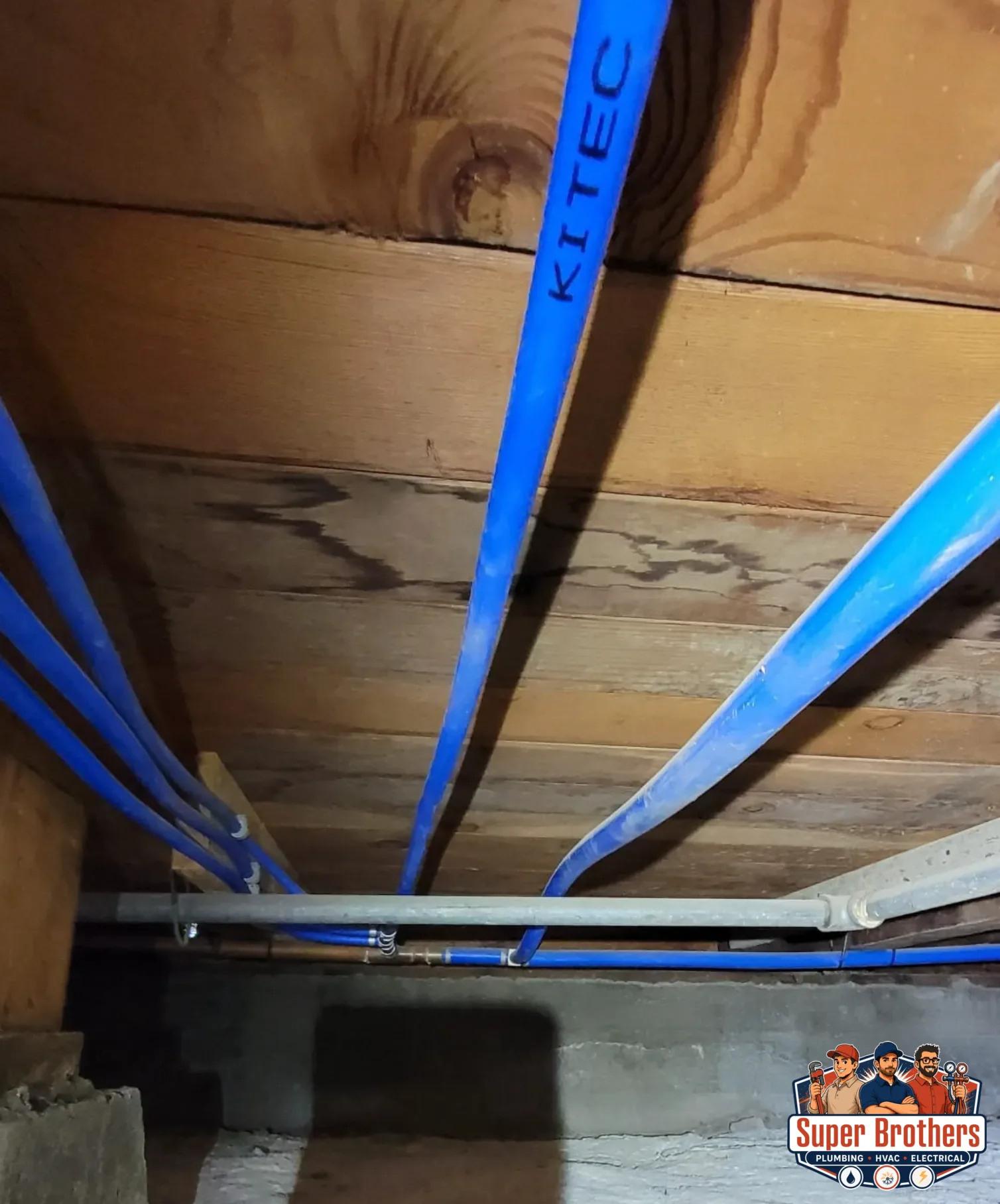
Kitec is a brand of composite plumbing used for hot and cold water distribution in many North American homes. The pipe itself is typically a layered material (often described as plastic-aluminum-plastic), paired with brass fittings that connect runs and transitions.
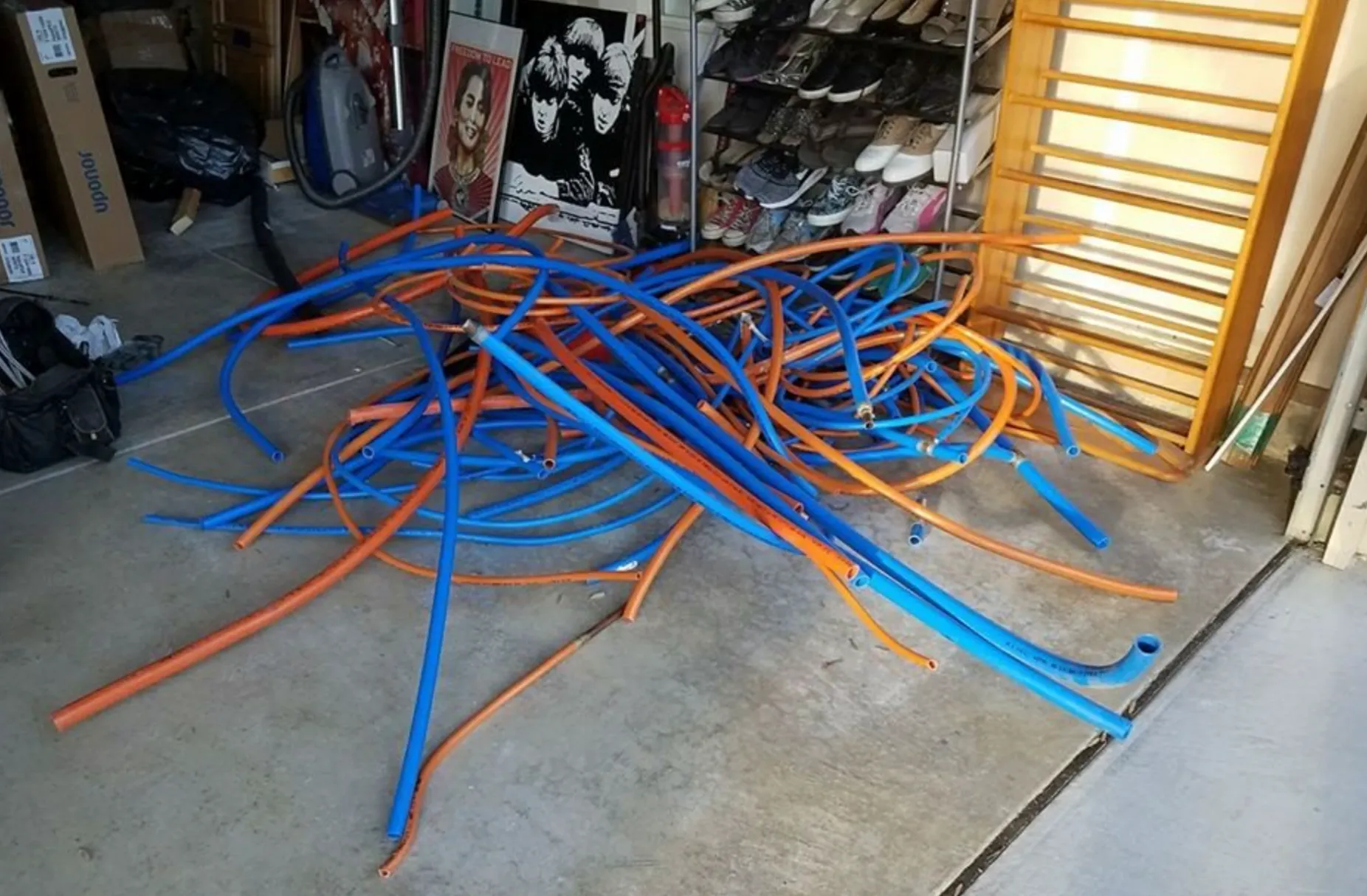
In many installations, hot water lines are orange and cold water lines are blue. Kitec was used in single-family homes, condos, and sometimes in radiant or hydronic applications. In California, it was installed in various communities during a period when builders were looking for speed and cost efficiency—two things Kitec promised on paper.
In the Sacramento region, homes most likely to have Kitec are those built or remodeled roughly in the 1995–2007 window. That doesn’t mean every home from that era has Kitec—but it’s common enough that any homeowner in that bracket should at least verify what’s in the walls.
Why Kitec Fails: The Real Mechanisms Behind Leaks and Pressure Loss
The failure of Kitec systems isn’t just “bad luck.” There are specific, repeatable mechanisms that show up again and again:
1) Dezincification and corrosion in brass fittings
Many Kitec systems rely on brass fittings that contain zinc. Over time, under the right conditions, zinc can leach out of the brass through a corrosion process called dezincification. When that happens, fittings can weaken and become more prone to cracking or leaking. At the same time, corrosion byproducts can create internal buildup that restricts flow—one reason homeowners report declining water pressure.
2) Flow restriction that masquerades as “normal aging”
A common trap is assuming low pressure is “just Sacramento water pressure” or “the shower head.” In a Kitec system, restriction can develop at fittings or inside runs, gradually reducing flow to fixtures. People often adapt (longer shower times, running appliances separately) without realizing it’s a plumbing system signaling distress.
3) Heat and pressure accelerate wear
Hot water lines tend to see higher stress. Temperature swings, constant pressure, and years of use can accelerate deterioration. Even if your system has “held so far,” age and conditions don’t reset—older Kitec systems are not getting safer with time.
4) Hidden failures behind walls, ceilings, and slabs
Many Kitec problems aren’t visible until drywall stains, baseboard swelling, or flooring damage appears. In two-story homes, a small leak on an upper level can travel along framing and show up far from the source—making diagnosis and repair more complicated and expensive.
Why Sacramento Homes Are Especially Vulnerable to Expensive Damage
Sacramento-area housing has a few characteristics that can make a Kitec leak more costly than homeowners expect:
- Slab foundations are common in many neighborhoods. If lines are routed in ways that make access difficult, even “simple” repairs can spiral into demolition and restoration.
- Two-story construction is widespread in late-90s and 2000s developments (Natomas, Elk Grove, parts of Roseville/Folsom and surrounding areas). Upper-level leaks can damage ceilings, insulation, electrical fixtures, and flooring below.
- Modern finishes are expensive to restore: tile showers, custom cabinetry, engineered wood, and open-plan layouts look great—until a hidden leak forces tear-out.
- Time-to-detection can be long in busy households. A slow leak in a wall cavity can run for weeks before it becomes obvious, increasing the risk of mold and structural damage.
That’s why many homeowners choose to treat Kitec like a proactive replacement issue—similar to replacing a failing roof before it caves in—rather than a “repair as it breaks” scenario.
How to Tell If Your Home Has Kitec
You don’t need x-ray vision to get a strong clue. In many homes, there are accessible locations where a quick inspection can identify Kitec:
Where to look first
- Near the water heater (garage, closet, utility room). Supply lines and transitions are often visible here.
- Under sinks (kitchen and bathrooms), especially where lines come up through the cabinet floor or wall.
- Laundry area behind or near the washer hookups.
- Attic access in some two-story layouts where distribution lines run overhead.
What it looks like
- Color: often orange (hot) and blue (cold).
- Markings: you may see “Kitec” and/or “IPEX” printed on the pipe or stamped on fittings.
- Fittings: brass fittings sometimes show a stamped marking such as “Kitec” or “KTC.”
If you’re unsure, a professional inspection is fast and usually definitive. The goal is not to “guess” based on the year your home was built—it’s to confirm what’s actually installed.
Warning Signs You Shouldn’t Ignore
Kitec failures often give signals before they become disasters. Here are the most common red flags:
Pressure changes and inconsistent flow
- Showers that take longer to rinse shampoo out
- Noticeable drop in flow when multiple fixtures run
- Hot side weaker than cold (or vice versa)
Leaks at fittings or “mystery moisture”
- Cabinet bottoms swelling or warping
- Musty smell near bathrooms, laundry, or the water heater
- Paint bubbling or stains on ceilings/walls
Unexplained increases in water bills
A slow leak can run constantly without making a sound. If your water use jumps and nothing in your routine changed, it’s worth investigating immediately.
Visible corrosion or crusty buildup
If you can see fittings, look for mineral/crust buildup, discoloration, or signs of corrosion. Those aren’t “cosmetic”—they can be indicators of ongoing deterioration.
Why a Full Repipe Is Usually the Best Long-Term Fix
When homeowners first learn they have Kitec, a common question is: “Can’t we just replace the fittings?” In most real-world cases, that approach becomes a money trap.
Repairs can turn into repeating emergencies
Replacing one leaking section doesn’t stop another fitting from failing later. It’s common to see a cycle where homeowners pay for multiple repairs over a few years, then eventually pay for a full repipe anyway—after additional damage.
A repipe replaces uncertainty with a known, code-compliant system
A professionally installed repipe gives you a new distribution system designed to meet current standards, with properly supported runs, clean transitions, and reliable shutoffs. Instead of hoping the next leak doesn’t happen during a vacation, you can plan the work on your schedule.
It’s often the most cost-effective path over time
Water damage restoration (drywall, flooring, cabinets, paint, mold remediation) can cost far more than plumbing work. Replacing Kitec proactively is frequently less expensive than reacting to the “big one.”
Copper vs PEX: What’s Best for a Sacramento Repipe?
Material choice matters, but so does installation quality. Two common choices for residential repipes are copper and modern PEX (not Kitec). Here’s the practical comparison for Sacramento homes:
Copper (a strong long-term choice)
- Durability: Copper has a long track record in residential plumbing.
- Heat performance: Excellent tolerance for hot water lines.
- Resale confidence: Many buyers and inspectors view copper as a premium system.
- Rigid, secure routing: Copper holds shape well and supports clean mechanical rooms.
Modern PEX (also viable when properly specified and installed)
- Flexible routing: Can reduce wall openings in certain layouts.
- Speed of installation: Often faster in complex homes.
- Fewer fittings in long runs: Can reduce leak points.
Important note: “PEX” is a category; Kitec is a specific system. A modern PEX repipe using current materials and fittings is not the same thing as leaving Kitec in place.
That said, many Sacramento homeowners prefer copper repiping specifically because it replaces Kitec with a familiar, proven material that buyers recognize and trust. SuperBrothers often recommends copper for homes where long-term durability and resale clarity are top priorities.
What a Professional Repipe Looks Like (Step-by-Step)
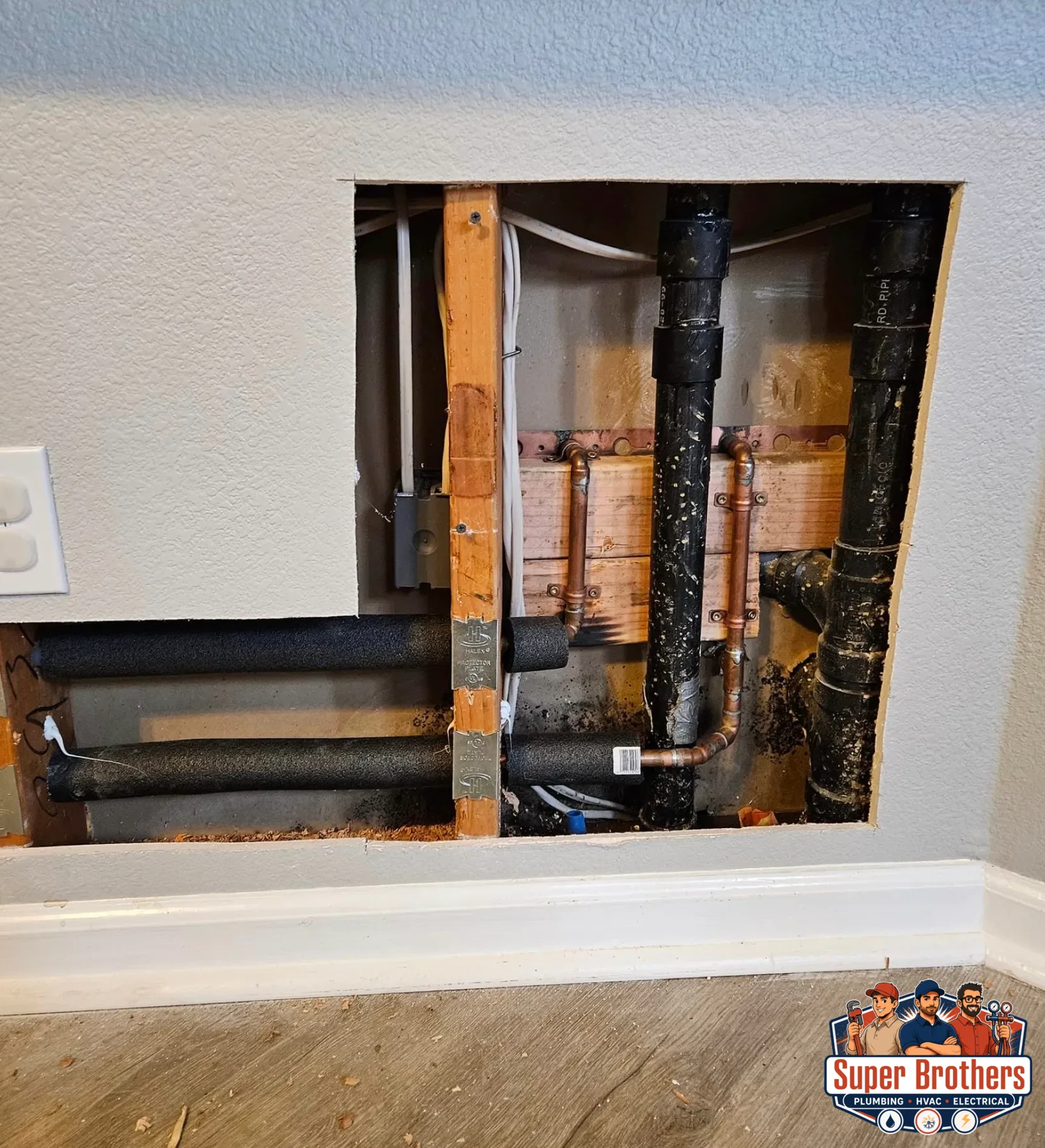
A repipe sounds intimidating until you see how it’s actually done. A professional team treats it like a controlled construction project with protection, planning, and clear checkpoints.
Step 1: On-site evaluation and piping map
The first job is understanding how water is distributed in your home: where lines run, how many fixtures, how the system is currently tied into the water heater, and which routing strategy minimizes wall openings.
Step 2: Clear scope and options
You should receive a scope that answers practical questions: Which lines are replaced? Are shutoff valves upgraded? Is the water heater reconnected with new code-compliant materials? What drywall restoration is included or excluded?
Step 3: Home protection and controlled access
Reputable repipe crews protect floors, isolate work areas, and keep dust and debris controlled. Openings are typically strategic—small access points rather than unnecessary demolition.
Step 4: Installation, pressure testing, and tie-in
New lines are routed, secured, and tied into fixtures. The system is pressure-tested to verify integrity before walls are closed. This is the moment where professional standards matter most.
Step 5: Patch, cleanup, and final walkthrough
After plumbing verification, access points are patched (depending on your agreement), work areas are cleaned, and the team walks you through shutoffs and any changes.
Home Value, Insurance, and Disclosure: The Hidden Costs of Waiting
Even if your Kitec hasn’t leaked yet, it can still impact your financial picture—especially if you plan to sell or refinance.
Buyers and inspectors notice Kitec
In real estate transactions, plumbing type is a frequent inspection note. If Kitec is identified, buyers may request a credit, demand replacement prior to closing, or walk away—especially in competitive financing situations where insurers and lenders scrutinize risk.
Disclosure risk
If you know your home has Kitec, it may be considered a material fact in a sale. The cleanest path is being able to say: “It was replaced professionally, here’s the documentation.”
Insurance realities
Insurance rules vary by carrier and change over time, but the general pattern is simple: plumbing systems associated with sudden water damage tend to raise questions. A repipe can remove that friction.
FAQ: Sacramento Kitec Replacement
How urgent is this if I haven’t had leaks?
If your home has Kitec and it’s well past the installation era, the risk generally increases with time. Many homeowners choose to replace it proactively so they can schedule the work on their terms rather than during an emergency.
Can you replace only the fittings?
In practice, selective repairs often lead to more repairs. If the system is showing corrosion, restriction, or repeated leaks, a full repipe is commonly the most reliable long-term solution.
How long does a repipe take?
Project length depends on home size, layout, and access (single-story vs two-story, crawlspace vs slab). A professional contractor should give you a realistic schedule based on an on-site assessment.
Do I need to leave my home during the work?
Often, homeowners can remain in the home during a repipe, though there will be periods of limited water use and active work areas. Your contractor should set expectations clearly in advance.
What does it cost?
Costs vary widely based on size, number of fixtures, access, and restoration scope. The right way to approach this is an on-site evaluation and a written estimate that clearly states what’s included.
Next Steps: Getting a Real Plan and a Real Quote
If you suspect you have Kitec—or you already know you do—the smartest next move is simple:
- Confirm the piping (visual ID or professional inspection).
- Assess risk and symptoms (pressure loss, leaks, corrosion signs, water bill changes).
- Get a repipe plan tailored to your layout, access points, and material preference.
Super Brothers provides Sacramento-area homeowners with professional repiping services designed to eliminate Kitec risk and upgrade plumbing performance. If your priority is a durable, resale-friendly solution, ask about a copper repipe with a clean routing plan, proper shutoffs, and a pressure-tested final system.
Disclaimer: This article is general information for homeowners and is not legal advice. For diagnosis and replacement decisions, consult a licensed plumbing professional familiar with your home’s layout and local requirements.
Local Examples: Where Kitec Shows Up Around Sacramento
While Kitec can appear anywhere, it is most commonly found in homes built or remodeled during the late-1990s and early-2000s building boom. In the Sacramento region, that can include parts of:
- Natomas
- Elk Grove
- Roseville
- Folsom
- Rancho Cordova
- Citrus Heights and surrounding communities with 1995–2007 remodel activity
If your home fits the timeframe, don’t rely on guesswork—verify the pipe type at the water heater and under sinks.